2024 and 2025 were the years of excited Generative AI experimentation. 2026 marks our entry into “The Pragmatic AI Era.”The question on every executive’s desk is no longer “Do we have AI?” It is: “Does the AI we have actually deliver ROI — and can we trust it to be safe and reliable at scale?”
We have identified 6 critical AI strategies for 2026, designed for organizations seeking to build effective, secure AI solutions that deliver impacts.
Pragmatic AI for ROI
Welcome to the Pragmatic AI Era, where cost-effectiveness is the cornerstone with a Multi-model Approach with model-routing as the winning factor.
Pragmatic AI in practice: deploying the right model for the right job, so every dollar of AI investment delivers measurable returns.
Forward-thinking organizations are adopting a Multi-Model Approach — strategically routing different tasks to different models based on complexity and cost. Rather than defaulting to large, resource-heavy models for every use case, the smarter play is deploying smaller, domain-specific models that are faster, cheaper, and purpose-built for the work at hand.
GenWiz – AI for High Impact solution features intelligent Model Routing. Lightweight models handle routine tasks, while complex challenges are escalated to more powerful models only when needed.
Think of a multi-model approach like having an elite AI team — each model doing what it does best, in perfect coordination. 100% teamwork. 100% efficiency
Build a "Private AI" That Speaks Your Business Language
Data breaches and prompt injection attacks, where malicious instructions are smuggled into AI systems to manipulate their behavior, remain a persistent and growing threat.
In an era where unique business knowledge is your competitive edge, relying solely on public AI models may expose your organization to unacceptable risks. Public models are built for general use; they are not designed to deeply understand your business context, your internal processes, or your confidential data.
Organizations are pivoting to building their own private AI , the solution to maintaining Data Sovereignty – keeping your organization’s knowledge inside your walls, under your control.
DDLG empowers organizations to develop what we call a Your Organization Language Model (YOLM) – an AI fine-tuned on your internal data, trained to understand your organization’s speak and context, and architected so that sensitive information never leaves your environment for public model training.
Ready to Deploy: GenWiz × Mac Studio
Our Private AI box solution pairs powerful hardware of Mac Studio with GenWiz software to help organizations deploy private AI quickly, safely, and cost-effectively — no complexity, no compromises.
Agentic AI: From Hype to Reality
In 2026 and moving forward, AI’s job is no longer just to answer questions. It is to get things done. The future is a shift towards collaborative Multi- AI Agent that work seamlessly alongside human teams, not just standalone chatbots.
We are pivoting to the age of AI Agents — AI systems that can reason, plan, and coordinate autonomously to complete complex, multi-step tasks.
How Agentic AI Adds Values to Your Team
HR
HR
AI manages the routine of Sourcing (scanning resumes), Assessment (personality testing), and Coordination (interview scheduling), allowing HR teams to focus on deep-dive interviews.
Sales and Business Development
Sales and Business Development
Agents automatically handle Documentation, drafting contracts and quotes based on company policy, legal requirements, and tax regulations, all while awaiting final human approval.
Finance & Accounting
Finance & Accounting
AI Agents act as Auditors (checking receipts), Compliance Officers (verifying regulations), and Forecasters (simulating cash flow), allowing CFOs to make precision-based decisions.
Marketing
Marketing
Agents act as Data Analysts to find peak buying times, Content Creators to draft copy, and Media Buyers to simulate budget allocation for maximum Return on Ads Spend (ROAS).
To unlock this potential, organizations need to establish a centralized AI Studio — a unified environment that encompasses the technology stack, use case evaluation frameworks, and sandboxes for testing. A dedicated AI team should oversee performance, trustworthiness, and safety across all deployed agents.
The Core Principle of Agentic AI
Agentic AI is not about replacing people. It’s about liberating them from routine, repetitive tasks, empowering them to do highest-value tasks: Strategic Decision-Maker. AI Agents handle the groundwork; humans lead the strategy.
Data Foundation & Governance: The Non-Negotiable Cores of AI
“Through 2026, organizations will abandon 60% of AI projects unsupported by AI-ready data.” - Gartner
There is no shortcut here: strong data management is the foundation of any AI strategy that works.
A 2024 Gartner survey found that 63% of organizations either lack or are uncertain whether they have adequate data management practices for AI. More concerning still: organizations that fail to distinguish between traditional data management and AI-ready data management are actively putting their AI investments at risk.
The upside is equally compelling. According to the 2025 Dataversity Trends in Data Management (TDM) Survey, companies with robust data governance report a 24.1% increase in revenue and a 25.4% reduction in costs attributable to AI — driven by the strength of their data foundation.
2025 was the year of chasing new AI models. 2026 is the year of getting your data in order. Because a model is only as intelligent as the data it is built on.
Data that is Trusted, Governed, and Semantically Rich is not a nice-to-have. It is an urgent prerequisite for AI that works reliably and earns the trust of your stakeholders.
Trustable AI is the Key
2026 is the year that AI regulation moves from discussion to enforcement. The EU AI Act and Colorado AI Act take full effect in August 2026 for high-risk AI systems — those affecting safety, fundamental human rights, and national security.
Global enterprises are already making a move on AI Governance, for example, appointing Chief AI Governance Officers, establishing formal AI governance policies, and building AI systems that are auditable, explainable, and aligned with ethical standards covering protection of personal data privacy (PII), brand risk, and organizational values.
accurate, representative, and responsibly collected
These are not just compliance checkboxes. They are the foundation of trust with your customers, partners, and regulators.
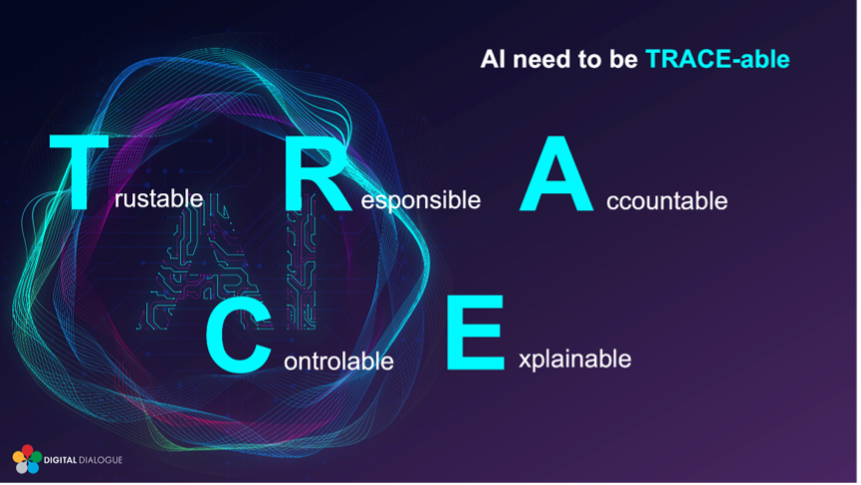
💡 GenWiz & the TRACE Model - DDLG embeds AI guardrails capability at the core in AI development. GenWiz is built on the TRACE Model framework — closing every vulnerability so your organization can deploy AI that is both safe and fully explainable.
New Era of AI Security: "Employee IDs" for AI Agents
Do not let your AI agents become a double agent.
As AI Agents become embedded in your operations, they require the same rigor we apply to human employee: a clear identity, least access privileges, and continuous behavioral monitoring.
Security in the agentic AI era must be ambient and built-in, not an afterthoughts. As your AI footprint grows, so does the attack surface. Organizations need embedded AI security for real-time monitoring and to prevent and respond to any incoming threats.
Executives must revisit their Identity and Access Management (IAM) strategy
Visibility – Do you have full visibility into every AI Agent operating in your organization right now?
Access Control – Do you know exactly what data each AI Agent is accessing?
Trust and Monitoring – Can you confirm that every AI Agent is behaving within its defined scope?
AI security is no longer just an IT team to tackle. It is a board-level strategic imperative. Every Agentic AI in your organization must operate within clearly defined boundaries — delivering productivity without compromising data security.
In 2026, the winning organizations will not necessarily be the ones with the most advanced AI. They will be the ones that use AI most strategically — through a Pragmatic AI approach that prioritizes real value and uncompromising safety.
The transition to Agentic AI and Private AI unlocks a new kind of human potential: elevating people from task executors to strategic decision-makers, powered by a strong, trusted data foundation.
ซึ่งในยุคที่ความลับทางการค้าคือหัวใจของความได้เปรียบ การพึ่งพา Public AI เพียงอย่างเดียวอาจไม่ตอบโจทย์ความปลอดภัยและเข้าใจบริบทเฉพาะขององค์กร
การสร้าง Private AI คือหนึ่งในคำตอบของการรักษา “อธิปไตยทางข้อมูล” (Data Sovereignty) ขององค์กร โดย DDLG เข้าใจความท้าทายที่องค์กรต้องเผชิญ และสร้างโซลูชันสำหรับองค์กรเพื่อสร้าง Private AI ที่ปรับจูนด้วยข้อมูลภายในองค์กรเอง
หรือที่เราเรียกว่า Your Organization Language Model (YOLM)โดยไม่มีการนำข้อมูลภายในองค์กรออกสู่ที่สาธารณะเพื่อการเทรน AI โมเดล
AI engine พร้อมใช้ เช่น GenWiz x Mac Studioที่แท็คทีมฮาร์ดแวร์ทรงพลังและซอฟท์แวร์สร้าง private AI เป็นหนึ่งในโซลูชัน Private AI box ที่องค์กรสามารถใช้พัฒนา private AI อย่างรวดเร็ว ปลอดภัยและง่าย ในราคาที่ใช่
Agentic AI — จาก Hype สู่ สนามจริง ทำงานควบคู่กับมนุษย์
AI ช่วยตรวจใบเสร็จ (Auditor), เช็กกฎหมาย (Compliance) และจำลองกระแสเงินสด (Forecaster) ให้ CFO ตัดสินใจได้แม่นยำขึ้น
การตลาด
การตลาด
AI ช่วยวิเคราะห์ข้อมูล, ร่าง Content และจำลองแผน media spend เพื่อให้ได้ ROAS (return-on-ad-spend) ตามเป้า
องค์กรต้องเริ่มลงมือปั้น AI Studio กลางที่รวม tech stack, framework ประเมิน use case และ sandbox ทดสอบเอาไว้ มีทีม AI เพื่อดูแลด้านประสิทธิภาพ ความน่าเชื่อใจและความปลอดภัยของ AI
หัวใจของ Agentic AI ไม่ใช่การมาแทนที่คน แต่คือการปลดล็อกให้มนุษย์ทำงานที่เป็น Routine น้อยลง แล้วเบนเข็มไปทำหน้าที่เป็น 'Strategic Decider' (ผู้ตัดสินใจเชิงกลยุทธ์) โดยมีทีม AI Agents คอยสนับสนุนด้านข้อมูลและช่วยลงมือทำอย่างแม่นยำ
Data Foundation & Governance for AI-ready Data — รากฐานที่ขาดไม่ได้
ภายในปี 2026 องค์กรจะละทิ้ง 60% ของโครงการ AI เนื่องจากคุณภาพข้อมูลที่ไม่ดีพอ -Gartner
ไม่สามารถปฎิเสธได้ว่าการจัดการข้อมูลคือเรื่องสำคัญในการสร้างรากฐานข้อมูลให้พร้อมสำหรับ AI หรือ AI-ready data
ในขณะที่ผลสำรวจจาก Dataversity – 2025 DATAVERSITY Trends in Data Management (TDM) Survey เผยว่าบริษัทที่มี data governance ที่แข็งแกร่งจะได้เปรียบอย่างชัดเจน โดยมีรายงานว่าบริษัทเหล่านั้นมีรายได้เพิ่มขึ้นถึง 24.1% และต้นทุนลดลง 25.4% จากการใช้ AI ที่มาจากธรรมมาภิบาลข้อมูล หรือ data governance ที่มั่นคง
ดังนั้นในปี 2026 องค์กรต้องเริ่มนำเครื่องมืออัตโนมัติต่าง ๆ เข้ามาช่วยจัดการด้าน data quality, data governance, metadataเพื่อเสริมความแข็งแกร่งให้ความพร้อมของ AI ในด้านข้อมูล
เสริมรากฐาน AI ให้แข็งแกร่งด้วย Trusted AI
ปี 2025 คือปีแห่งการเห่อ AI โมเดลใหม่ๆ ปี 2026 คือปีแห่งการ “จัดระเบียบข้อมูล” เพราะโมเดลจะฉลาดได้เท่ากับคุณภาพข้อมูลที่ใช้เทรน
หัวใจสำคัญ: เน้นไปที่ Unstructured Data (ข้อมูลที่ไม่มีโครงสร้าง เช่น วิดีโอ, เสียง, เอกสาร) ซึ่งจะกลายเป็นขุมทรัพย์หลักในการสร้างความแตกต่างทางธุรกิจ
ปี 2026 เป็นปีที่ EU AI Act และ Colorado AI Act มีผลบังคับใช้เต็มรูปแบบในเดือนสิงหาคมสำหรับ high-risk AI systems หรือ AI ที่มีผลกระทบต่อความปลอดภัย สิทธิขั้นพื้นฐานและความมั่นคง ทำให้บริษัทระดับโลกขยับตัวอย่างรวดเร็วในด้าน AI Governance เพื่อนสร้าง AI ที่ตรวจสอบได้ มีความโปร่งใสสูง มีการแต่งตั้งหัวหน้าฝ่ายธรรมาภิบาล AI (AI Governance Head) หรือมีนโยบายควบคุมดูและ AI อย่างเป็นทางการ ที่ครอบคลุมทั้งเรื่องจริยธรรม (Ethics), ความเสี่ยงต่อแบรนด์ (Brand Risk) และการคุ้มครองข้อมูลส่วนบุคคล (PII)
AI ที่ฉลาดแต่ตรวจสอบไม่ได้ ไม่สามารถอธิบายกระบวนการคิดได้ หรือที่เรียกว่าระบบกล่องดำ Black Box คือความเสี่ยงในอนาคตที่องค์กรต้องจัดการ
องค์กรควรเริ่มสร้าง AI บนโมเดลที่เรียกว่า “Trusted AI” ที่เน้น
ความโปร่งใส อธิบายได้ (Explainability)
ปราศจากอคติ (Unbiased)
การออกแบบระบบ AI อย่างมีจริยธรรม (Ethical Design)
ข้อมูลที่สะอาด (Clean Data)
Trusted AI จึงกลายหัวใจสำคัญเพื่อสร้างความเชื่อมั่นให้กับทั้งลูกค้าและคู่ค้า
DDLG เสริมความพร้อมด้าน AI guardrail ให้องค์กรด้วยโซลูชัน AIที่มี TRACE Model เป็นโครงสร้างพื้นฐานสำคัญ สร้าง Guardrail ปิดทุกรูรั่ว เพื่อให้มั่นใจว่าองค์กรสามารถสร้าง AI ที่เป็นปลอดภัยและสามารถอธิบายเหตุผลเบื้องหลังทุกการตัดสินใจได้
AI Security รูปแบบใหม่ — AI Agent ต้องมี "บัตรพนักงาน" และ "ระบบรักษาความปลอดภัย" ไม่ต่างจากมนุษย์
เรื่องนี้ไม่ใช่แค่หน้าที่ของฝ่าย IT อีกต่อไป แต่เป็นเรื่องระดับกลยุทธ์ที่ผู้บริหารต้องให้ความสำคัญ เพื่อให้มั่นใจว่า Agentic AI ทุกตัวทำงานตามขอบเขตที่ได้รับมอบหมาย และสร้างผลิตภาพ (Productivity) โดยไม่ทำลายความปลอดภัยด้านข้อมูลขององค์กร
สรุปสั้น ๆ ในปี 2026 นี้ กุญแจสำคัญสู่ความสำเร็จไม่ใช่เพียงการครอบครองเทคโนโลยีที่ล้ำสมัยที่สุด แต่คือการรู้จักเลือกใช้ AI อย่างมีกลยุทธ์ผ่านแนวทาง Pragmatic AI ที่เน้นความคุ้มค่าและความปลอดภัยสูงสุด การเปลี่ยนผ่านสู่ยุคของ Agentic AI และ Private AI ที่น่าเชื่อถือจะช่วยปลดล็อกศักยภาพให้มนุษย์ก้าวขึ้นมาเป็นผู้ตัดสินใจเชิงกลยุทธ์ได้อย่างเต็มที่ โดยมีรากฐานข้อมูลที่แข็งแกร่งเป็นตัวขับเคลื่อน
DDLG พร้อมเป็นพันธมิตรในการวางรากฐาน Trusted AI ผ่านโซลูชัน GenWiz และ CUBIKA Big Insights เพื่อขับเคลื่อนกลยุทธ์ AI ขององค์กรอย่างมีประสิทธิภาพและยั่งยืน